Build a joint schedule before a shopping list
If you are collecting requirements from several installation areas, give each proposed coupling position a joint reference. Connect that reference to a drawing, a line number or an equipment tag. Ask the person preparing the takeoff to identify what is being joined at each position. Keep the connection details and questions attached to the relevant purchase line in your joint schedule.
Separate the quantities you have counted from quantities that are still allowances. You might need an initial inquiry while drawings are being coordinated; in that case, label the unresolved positions and name the person who will confirm them. Don't fold provisional quantities into an apparently final total. Ask for the quotation to preserve your item references so that a change to a drawing can be traced to a specific line without reconstructing the entire inquiry.
For a mixed package, keep the coupling quantities distinct from fittings, pipe and other requested items. State whether you want a quotation for XGQT02 alone or a response covering associated components as well. Where a component belongs to another purchasing package, mark it as buyer supplied and attach its reference information. Ask for review of that proposed interface before treating the combination as accepted.
Describe both sides of the proposed connection
Give the reviewer information about each mating item. Ask your technical team which pipe identification, end details and dimensional references should accompany the inquiry, then submit those details against the joint schedule. If the two sides come from different suppliers, make that visible. Avoid using a photograph of a complete assembly as the only description: include the relevant drawing or measured information that your team has checked and can explain.
The word 'flexible' identifies the catalogue product; it does not answer a project specific question about permitted movement or the behavior of an assembled joint. If movement is part of your selection brief, describe the movement requirement and ask for a documented response for the exact proposed configuration. Ask who must approve that response within your project. Don't convert a product name into an engineering allowance or make an installation decision from the name alone.
The same approach applies when you are replacing an existing item. Record the old assembly's identification, the intended replacement location and any information you cannot verify. Send clear photographs as identification aids, but ask for the dimensional and connection review you need before ordering. A purchasing request should distinguish 'please identify a candidate' from 'please quote this approved selection.' Identify the requested stage of review in the subject line.
Make the component scope explicit
Ask the quotation to state exactly what is included in each quoted coupling item. If your purchase specification calls for particular sealing components, fasteners, markings or packaging, list those as requirements to be answered. Don't infer the supplied contents from a photograph or from the name of the product. Ask for any separately quoted items to retain the parent coupling line reference, so that your purchasing review can see the proposed package in full.
If your own store holds components from earlier orders, identify them separately. Tell the supplier whether those components are being offered for review or merely shown for background. Ask whether the proposed combination can be assessed and what additional information is needed. Keep the response with the relevant item; don't let a general email comment become blanket permission to mix parts across sizes, batches or unrelated assemblies. Your project reviewer should determine what is acceptable.
For spare parts planning, describe the purpose of the requested spares and ask for identification guidance tied to the proposed order. Separate complete couplings from any requested component quantities. If your maintenance team needs an itemized record, say so before commercial comparison. Ask whether the response can identify the offered items clearly enough for later reordering. This is a documentation request, not an assumption that every component is available separately or that a particular spare arrangement is offered.
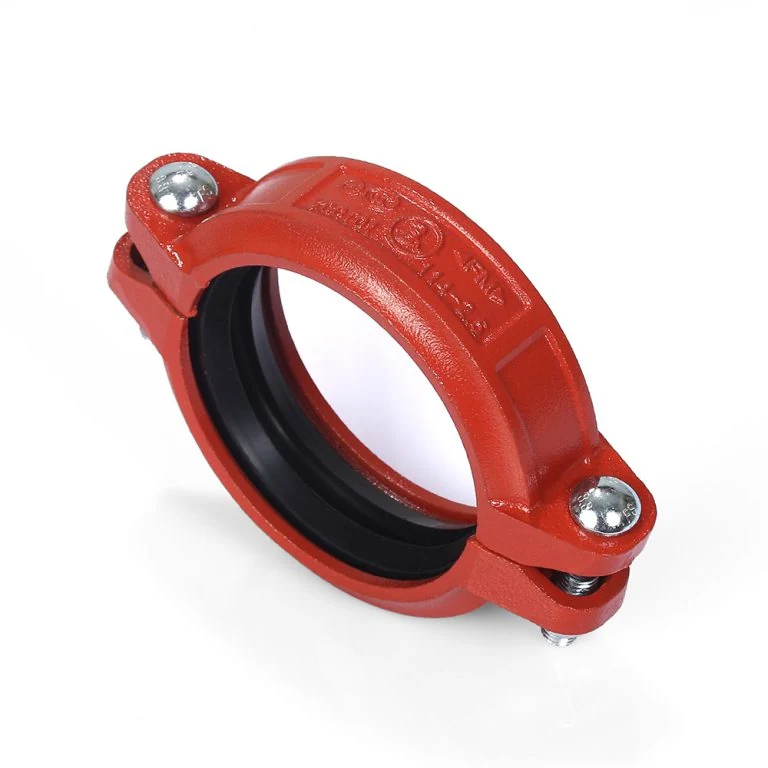
Reference this model in your product list. Add the exact requested size and quantity, then identify any documents you need for review.
Include this model in your inquiry →Put service requirements in the inquiry
Ask your project engineer to provide the intended service conditions and the acceptance requirements that apply to the connection. Submit the medium, required pressure and temperature conditions, relevant project specification and any operating context the engineer considers necessary. These are buyer requirements for review. The catalogue size range does not establish a rating, material selection or suitability for your service, and a size match should not be treated as a completed technical selection.
If compliance documents are required, name them precisely and explain when you need them. Ask whether documentation for the offered model, size and configuration can be provided. A purchasing team may need information for tender review, technical approval or order records; identify the applicable stage rather than requesting an undefined 'full certificate package.' Ask the reviewer to flag unavailable documents or exceptions before you move the item into an approved purchasing list.
Where a project specification uses a different description from the product catalogue, include both descriptions and ask for clarification. Don't silently rename XGQT02 to make it appear to match a specification. Request an explicit response to the requirements that matter to your project, and route any proposed deviation to the responsible technical person. Keep the product identity constant while the questions are resolved, and use it in later comparisons and correspondence.
Compare quotations as complete packages
Begin comparison with the line schedule. Has each requested size received a response? Does every quantity carry the same unit of measure? Is the offered scope clear enough to distinguish a complete coupling item from additional components? Ask for corrections where a quotation merges distinct lines. A single package price may be useful commercially, but your team should still request enough item detail to understand what is being offered and what remains outside the scope.
Put delivery destination, requested delivery timing and any proposed order stages in your inquiry. Ask for the available commercial terms, minimum order requirements and lead time to be confirmed for your actual request. State which dates are project needs and which dates have been agreed in writing. If you are collecting a budget price, label it that way and ask what would need to be reconfirmed before a purchase order can be issued.
For distribution purchases, attach your intended stock list rather than assuming the entire catalogue range is immediately available. Ask for a response by stock item and for clarification of any proposed changes to quantities or packing. If you need package labels to match your internal item codes, provide the proposed label information for discussion. Keep a record of what was requested, what was offered and what your team accepted; a catalogue reference alone cannot capture those commercial decisions.
Prepare the handover from buying to receiving
Before releasing the order, ask your receiving team what information they will need to identify the coupling lines. Include the agreed product descriptions, quantities, item references and document requirements in the purchasing record. If you plan to divide the goods among several locations, request a packing proposal that your team can review. Confirm the proposal with the supplier rather than assuming the order will arrive grouped by your installation sequence.
Arrange for technical questions to remain visible after the quotation stage. An unanswered interface question should not disappear when a buyer copies a price into an order form. Keep pending items in a separate query list, identify who owns the answer and establish which questions must be closed before release. Ask your project lead to define the release conditions. Follow those release conditions and request technical approval separately from the commercial quotation.
To begin, use the product catalogue to identify XGQT02, consult the RFQ checklist for the information to gather and submit your model specific inquiry through the contact page. Attach the joint schedule and the relevant drawings where possible. If some details are missing, identify them plainly and explain what kind of response you need now. Connect each question and specification requirement to the actual coupling positions under review.
Retain a reference for future coupling requests
After your project accepts a coupling selection, ask the purchasing team to retain the agreed item description and component scope with the order reference. For a future inquiry, send that reference and identify what is changing: quantity, destination, mating components or service requirements. Ask for the proposed new order to be confirmed rather than treating an earlier acceptance as approval of a changed assembly.
If maintenance staff request a replacement from a store label, ask them to link that label to the original purchase record. Include the relevant size and configuration information in the new inquiry. Where the record is incomplete, flag the missing details and request identification guidance. Ask your technical reviewer which checks must be repeated before the replacement request can be released. Keep any requested spare components separate from complete coupling quantities, and ask the supplier to identify the contents of the new offer explicitly.
Purchasing questions
What is the listed size range for XGQT02?
The VICAST Flexible Coupling XGQT02 is listed with a catalogue range of 1–12 inches / DN25–DN300. Ask for confirmation of your exact requested size and configuration. The range should not be read as confirmation that every intermediate size, component combination or quantity is available for an order.
Can I order by pipe size alone?
Start with the required size, but also provide the mating item details and your project requirements. Ask for the proposed connection to be reviewed using the information your technical team supplies. Size alone does not settle the component scope, service suitability, document requirements or the acceptance of a particular assembly.
Does the name specify a movement allowance?
No movement allowance is stated here. If your selection depends on movement, submit the requirement and request applicable product information for the exact proposed configuration. Have the responsible engineer review the response before treating XGQT02 as an approved selection for that location.
How should I request couplings and spare components together?
List the complete coupling quantity and the requested spare items separately, with shared references to the relevant size and proposed configuration. Ask what can be offered and how it will be identified in the quotation. Confirm supplied contents explicitly; do not assume that individual components are offered separately or can be mixed with existing stock.
Catalog reference: VICAST XGQT02 product listing. Size range is a catalog reference; confirm your exact order requirements.