First separate the fitting family from the outlet description
QRFS explains the general mechanical tee concept as a connection made through an opening in a pipe, with a joint secured around the pipe's circumference. Its tee-sizing guide also describes an equal tee as having three openings of equal size. These are useful identification clues: look for the relationship between the fitting and the run pipe, rather than starting with the red finish or the word tee on a quotation.
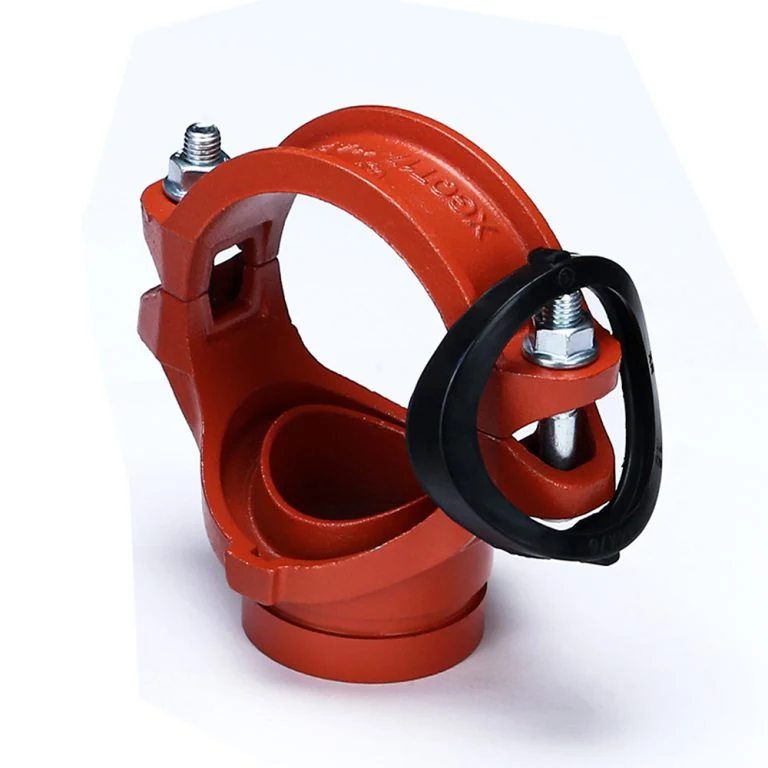
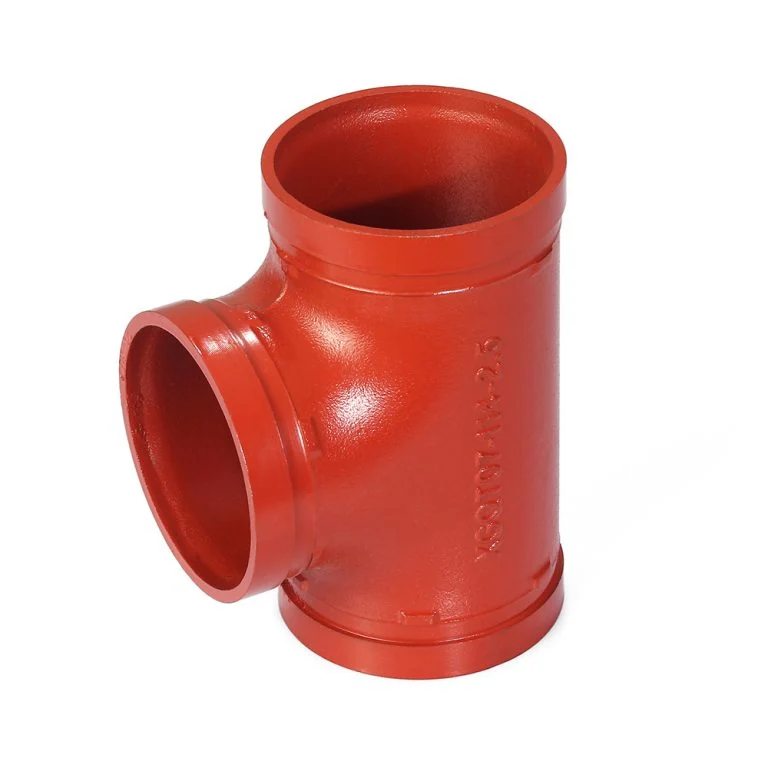
In this comparison, full-body grooved tee means the separate tee-shaped fitting you are trying to identify; mechanical tee means the branch-outlet family. Record grooved in the connection-description field of your inquiry, while keeping the fitting family in its own field. Ask for a product drawing whenever the wording could describe either family. If you want the supplier to propose an alternative, label that request separately from the component already shown on your drawing.
Start with the mechanical tee and cross range when your inquiry concerns a mechanical branch outlet. Use the adjacent category of full-body grooved tees and crosses when you need to identify a complete tee or cross fitting. Choosing a catalog section is only the first step toward identifying the required item.
A quick comparison for a purchase request
Use the following table to frame a clarification request. Read the identification questions alongside the marked project drawing, then ask the supplier to identify the proposed item. Keep cost, delivery, and additional project requirements in separate fields so the component description remains easy to review. Begin by making sure everyone is discussing the same kind of component.
If a supplier sends a different family from the one you requested, pause the price comparison. Ask whether the proposal is a correction to your description or a suggested design alternative. Keep that answer with the quotation. A lower price is not a useful comparison until the item and its scope are clear.
| Identification question | Mechanical branch outlet | Equal tee reference |
|---|---|---|
| What are you identifying? | A branch connection associated with the run pipe | A tee with three same-sized openings |
| What should the inquiry show? | Run pipe, branch position, and requested outlet | Each tee opening and its connection description |
| What does equal mean? | Do not infer the branch size from the word mechanical | For an equal tee, the three openings have the same size |
| What remains to be confirmed? | Exact model and ordered run/branch configuration | Exact model and ordered opening configuration |
Use VICAST models as catalog references, not substitutions
VICAST's catalog identifies XGQT07 as Tee Equal and lists a size range of 1–12 inches / DN25–DN300. The XGQT07 equal grooved tee is therefore a useful reference when your purchasing discussion concerns an equal tee. Include the model in your request, then state the required size and attach the relevant drawing rather than sending the model number alone.
The catalog identifies XGQT15 as Mechanical Tee, with a listed range of 1½–10 inches / DN40–DN250. You can use the XGQT15 grooved mechanical tee as the corresponding mechanical-tee reference. Do not read either published range as a complete matrix of run and branch combinations, or as confirmation that a requested configuration is available.
Put the chosen catalog reference beside the corresponding component on the project drawing. If a supplier proposes XGQT15 where you requested XGQT07, or the reverse, ask them to explain the proposed change. Have the responsible project reviewer identify which documents need updating before amending the purchase description. Keep the original request visible beside the proposed alternative, with a separate space for the review decision.
Resolve an ambiguous tee line before asking for a final price
Consider a purchasing worksheet that says only grooved tee, with a size and quantity. Treat this as an incomplete description. Ask the person who prepared it to mark the intended component on the drawing and identify whether they mean a full tee body or a mechanical branch connection. Give the supplier that marked view together with the worksheet; don't ask them to infer design intent from the shortest possible item name.
Next, mark the openings or pipe connections that need identifying. For a mechanical branch request, label the run and the branch separately. For an equal tee request, ask the reviewer to confirm the equal-opening description. If a photograph is available, use it to explain which component you are discussing, while requesting a drawing or specification for the details the photograph cannot establish.
Write the clarification back into the purchase line. A useful draft is: requested fitting family; proposed catalog model; required size or run/branch sizes; drawing reference; unresolved questions. Leave an unknown field visibly open instead of copying an answer from a neighboring item. The result should let another buyer understand why the model was selected without reopening the entire email conversation.
After the family decision, define the branch connection
Once the request is clearly for a mechanical tee, move to the outlet question. VICAST also lists XGQT15S as Mechanical Tee Threaded, with a catalog range of 1–10 inches / DN25–DN250. That separate name is a reason to record the outlet description explicitly. Request written confirmation of the specific size and interface proposed for your order.
If threaded is the requested description, ask for the actual thread designation rather than stopping at that word. ASME's B1.20.1 overview covers dimensions and gaging for NPT, NPSC, NPTR, NPSM, and NPSL. ISO 7-1 addresses pipe-thread designation, dimensions, and tolerances. Use those published scopes to help identify which requirement your project team needs to name. Ask the supplier to state the offered designation and provide the corresponding product document for review.
The separate guide to threaded versus grooved mechanical tee outlets takes this next decision further. It covers the information to request for each outlet and a quotation comparison format, so you can keep the family question here and the interface question in its own purchasing review.
Make the inquiry answerable
Send a compact, organized inquiry rather than a collection of unlabelled catalog screenshots. Identify the fitting family and candidate model in the subject or item table. Attach the drawing that explains the request. Ask the supplier to identify the exact proposed configuration and to list any unresolved requirements separately from the price. This gives you a practical place to record a clarification without presenting it as an accepted change.
For example, ask: Does the proposed item correspond to the marked component? What ordered size description should appear on the quotation? Which product drawing supports that description? What information is still needed from the project team? Assign each open question to the person who can answer it. Request supporting documents for any additional project requirements, and record the reviewer's response alongside the proposed item before accepting a revised description.
Use the grooved fitting RFQ checklist to organize the commercial request after the component is identified. Keep quantities, requested documentation, and delivery requirements distinct from technical questions. Before issuing an order, compare the final quotation with the clarified item description, not merely the original shorthand.
Questions buyers ask
Is a mechanical tee the same thing as a grooved tee?
Ask whether the request is for a mechanical branch outlet or a separate tee body. Record the requested connection in its own field, then ask for the model and a drawing. Review any proposed substitution against the clarified item description before changing the order.
Does equal tee mean the branch opening is the same size?
In the general equal-tee definition explained by QRFS, all three openings have the same size. VICAST lists XGQT07 as Tee Equal. State the required size in the inquiry and have the quoted item identified; the catalog range is not an order confirmation.
Can the catalog range tell me which mechanical tee combination to order?
Use the range to locate a catalog reference, then request confirmation of the specific run and branch configuration. Identify the intended outlet, attach the relevant drawing, and ask for the exact proposed item. Do not turn a broad range into an assumed list of available combinations.